01
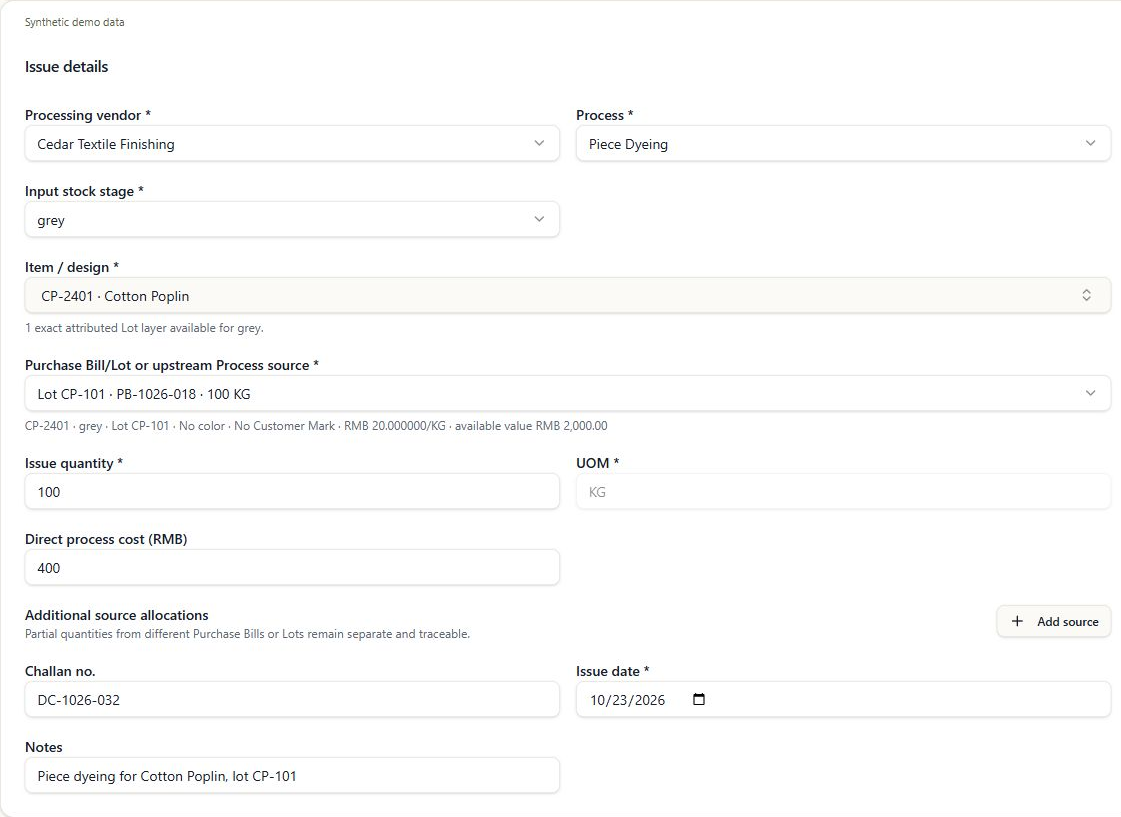
Issue a specific stock lot
A processing job identifies the vendor, process, item/design and source purchase lot. Issue quantity and stock unit stay attached to that material, alongside the expected processing cost.
Textile operations ERP
Following fabric from stock to outside processing, partial receipt and the accounts behind each movement.
The problem
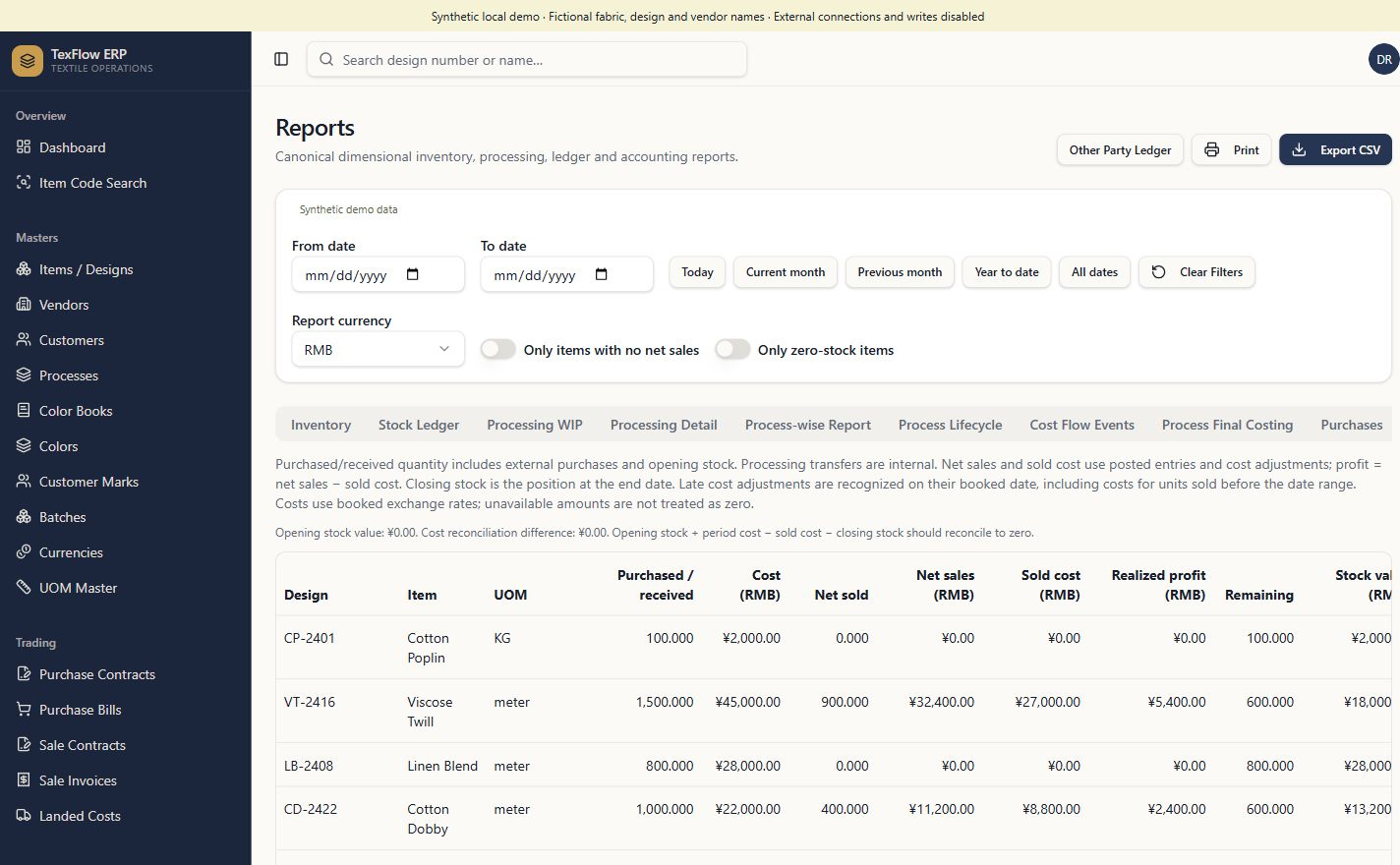
Fabric leaves the stockroom for dyeing, printing or finishing at an outside vendor, then returns in stages. The business needs to know what was issued, what came back, what remains outside and how each movement affects stock and cost.
Inside the work
A processing job identifies the vendor, process, item/design and source purchase lot. Issue quantity and stock unit stay attached to that material, alongside the expected processing cost.
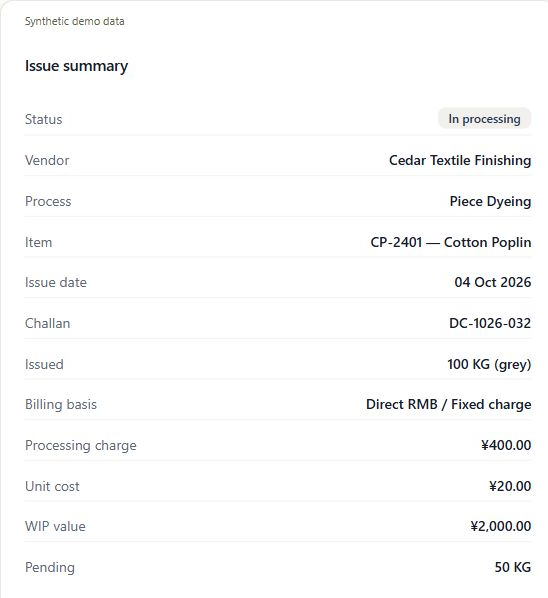
A job can remain open after a partial return. The receipt records what came back and its cost, while the job keeps the quantity still with the processor visible.

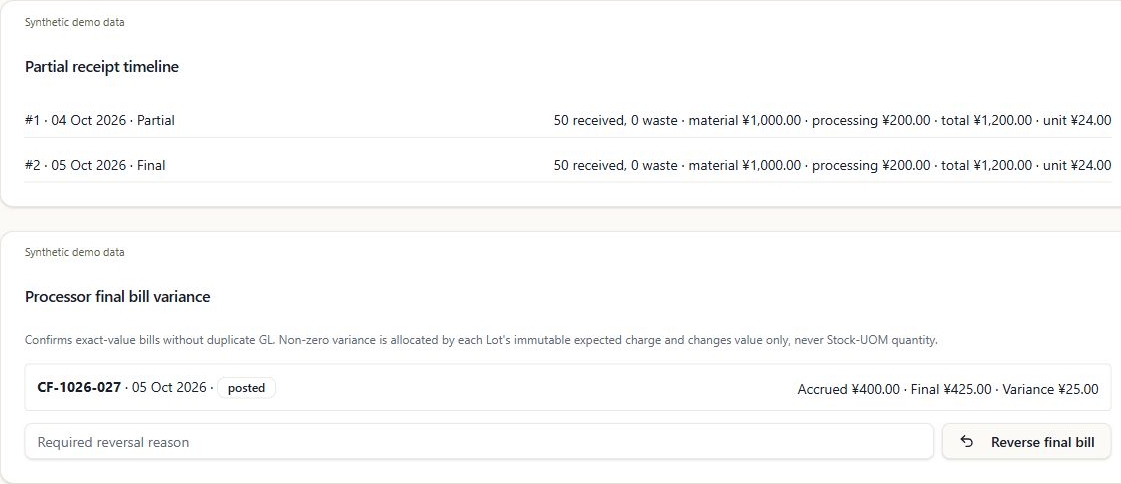
Receipts carry material and processing costs. When the vendor’s final bill differs from the accrued charge, a separate variance records the adjustment, with a reversal path and a required reason.
A decision that mattered
A final processing bill can change the cost of a stock lot without changing how much material exists. TexFlow records that difference as a value adjustment rather than another stock receipt.
The stock quantity remains intact, while the adjustment and its reversal remain traceable in the commercial and accounting record.
Current state
TexFlow has a live deployment, with accounting and reporting work continuing.